Everyone skipped the Tier 2 hospital pharmacy. Here's why we didn't.
Marg was built for retail. The HMS pharmacy module is an afterthought. And every funded pharmacy startup went straight for the metro chains. The nursing home pharmacy in Hisar got nothing. We went there first.
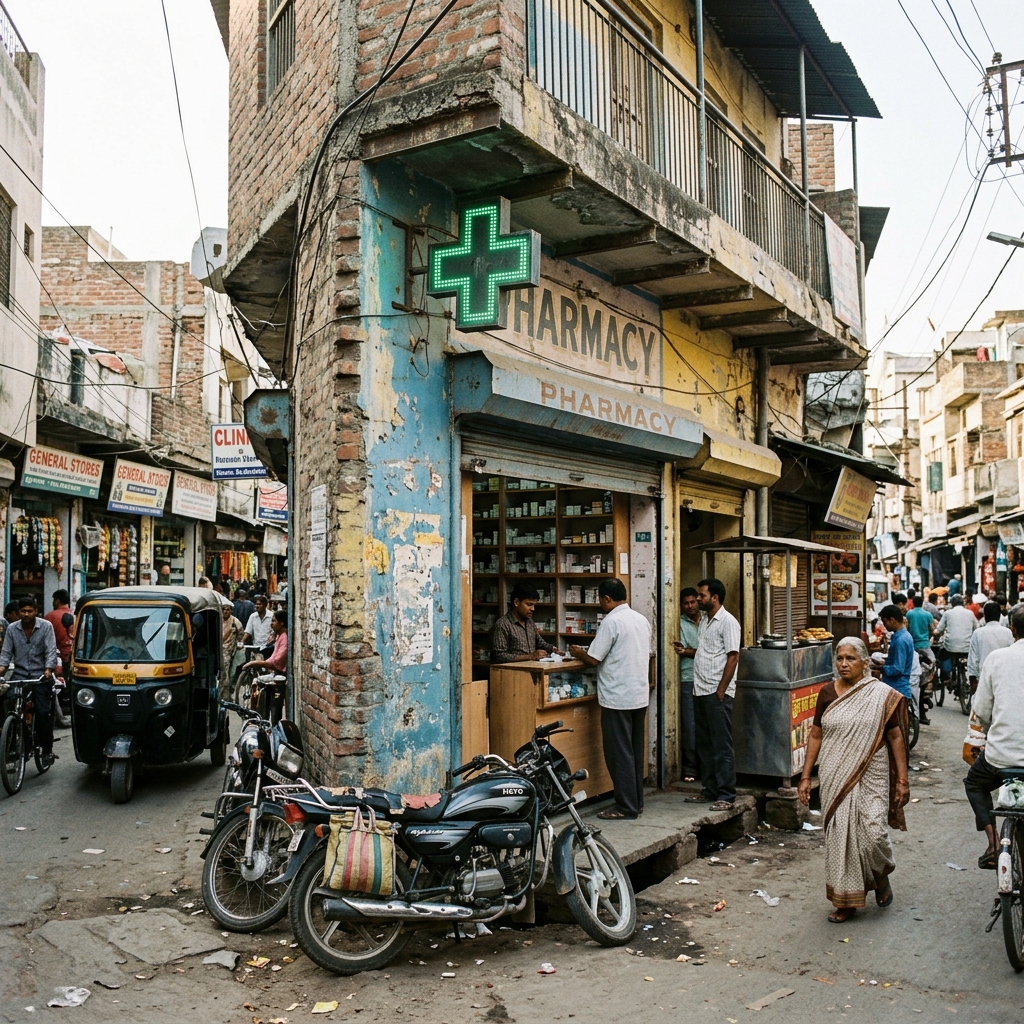
"Every software company that visited left without a sale. Not because the pharmacist wasn't interested. Because what they were selling didn't fit."
40-bed nursing homes in Haryana. Not exactly a pitch competition slide.
If you look at where pharmacy software investment has gone in India over the last decade, the picture is pretty clear.
Retail pharmacy chains: well-served. Big hospital systems with IT budgets: well-served. E-pharmacy apps looking to disrupt the counter entirely: extremely well-funded.
The nursing home with 40 beds in Hisar. The 60-bed private hospital in Karnal whose pharmacy has three staff and no IT department. The clinic pharmacy in Rohtak that does 80 bills a day and reconciles GST on the last weekend of every month.
Completely ignored.
Not because the market is small. There are more than 70,000 nursing homes and small private hospitals in India. Most of them have pharmacies. Most of those pharmacies are running on Marg, on Busy, on Excel, or on paper.
Ignored because it's hard to reach, hard to sell to, and doesn't look impressive in a funding deck.
Retail software in a hospital setting doesn't just fit badly. It breaks things.
Marg and Busy are good software for what they were designed for. A retail chemist counter, processing cash sales, managing a supplier relationship, tracking simple stock. That's a real business and they serve it well.
A hospital pharmacy is a different operation entirely.
The billing screen needs patient name, doctor name, prescription reference, and Schedule H1 handling built in — not as a workaround, but as primary fields. The stock system needs FIFO batch tracking because the Drugs and Cosmetics Act requires it. The register needs to be linked to the billing so they can never fall out of sync. The GST calculation needs to handle multiple slabs in the same transaction, because a single hospital bill often crosses drug categories.
When a nursing home pharmacy owner installs Marg and tries to make it work for their counter, they spend the first three months fighting the software's assumptions. Then they give up and go back to paper for the parts that don't fit. Then they run a hybrid — some things in software, some things in the register, some things in a WhatsApp message to themselves.
That hybrid is what we found in every pharmacy we visited. Not failure. Workarounds. Creative, exhausting workarounds for software that was never designed for their reality.
The harder market to serve is usually the one worth serving.
We didn't start with the metro pharmacy chain because we didn't want to build another enterprise HMS module. We didn't start with e-pharmacy because we're not interested in replacing the counter — we're interested in making the counter work better.
We started in Haryana because that's where the gap was.
Not a gap in the sense of "no one is trying." A gap in the sense of "no one has tried to actually understand the problem." There's a difference. The first produces a lot of failed software. The second produces nothing — which is what most Tier 2 hospital pharmacies have to show for twenty years of the software industry existing.
We went to Hisar. We went to Rohtak. We went to Karnal and Panipat. We sat at counters. We asked naive questions and followed the answers. We watched how billing actually happens at 11am on a busy OPD day, not how it's described in a product requirements document written in a Bangalore office.
What we built came from what we saw. Not what we assumed.
- WeDose is designed for 20–150 bed hospitals and nursing homes — the segment that's too complex for retail software and too small for enterprise HMS vendors to care about.
- Onboarding is designed to be completed in one afternoon by the pharmacy owner themselves — no IT consultant, no training course, no three-month implementation project.
- Pricing is set for the actual economics of a nursing home pharmacy — not enterprise pricing scaled down, but pricing built from the ground up for this customer.
- The founders provide half-day on-site help for opening stock migration — because we've done it enough times to know where it goes wrong.
Built for the counter that bills 80 patients. Not the one that looks good in a demo.
There's a version of hospital pharmacy software that's designed to impress. Lots of modules. Lots of screens. A dashboard with twelve widgets. It looks great in a sales presentation and falls apart on day three at a real counter.
We're building the other version. The one where the billing screen is fast enough to keep up with a busy OPD hour. The one where the pharmacist doesn't need training to understand what they're looking at. The one where the compliance work happens automatically so filing day is just another Friday.
It's not flashy. It's not the kind of thing you'd put on a pitch deck. But it's the kind of thing a pharmacist in Hisar would actually use — and keep using — because it fits the way their day actually works.
That's the market. That's who we're building for.
If you've been waiting for software that was built for you — not retrofitted for you — we'd like to talk.
We're currently onboarding hospital pharmacies in Haryana for the pilot. If you run a nursing home pharmacy or a small private hospital pharmacy, reach out.