Why we send alerts on WhatsApp, not email
Every pharmacy software we looked at sent alerts to an email inbox. We went to Haryana and watched how pharmacy owners actually start their day. Nobody was opening email. Here's what we built instead.
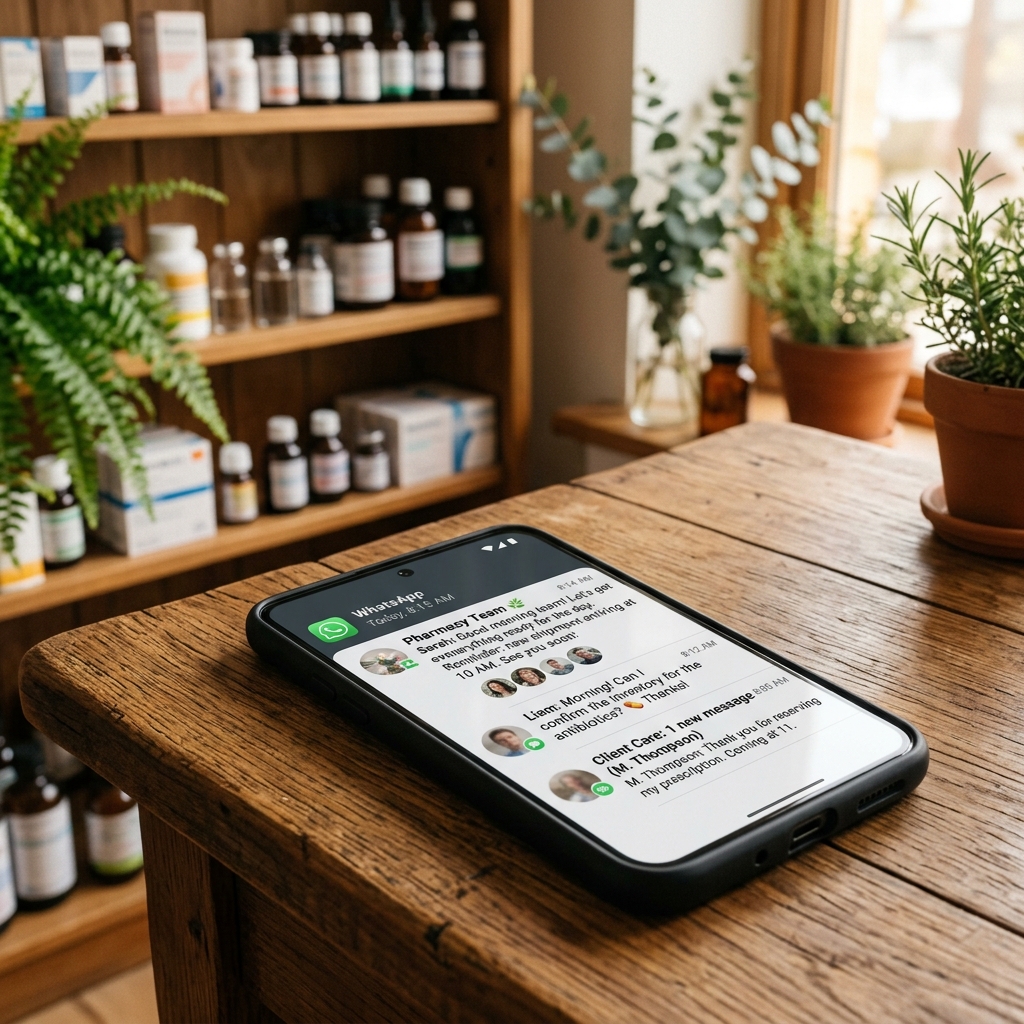
"He unlocked his phone at 6:58am. Checked WhatsApp. Put the phone back in his pocket. The store opened at 7. I never saw him open email."
We watched how pharmacy owners actually start their day.
Before we designed the alert system for WeDose, we spent time just watching.
Not asking. Watching.
We wanted to understand what the first 20 minutes of a pharmacy owner's morning looked like — before the counter opened, before the first patient came in, before the day took over.
What we saw was consistent across every pharmacy we visited. The owner checked WhatsApp. Then they made a call or replied to a message. Then they unlocked the store.
Nobody opened a laptop before 9am. Nobody logged into a dashboard to see what was expiring. Nobody read an alert email — not because they're disorganised, but because the inbox is where newsletters go, not where decisions get made.
A great alert sent to the wrong channel is just noise.
This is the thing most software companies get wrong. They build alerts — genuinely useful, well-timed, accurate — and then they send them to email.
Email is not where a nursing home pharmacy owner in Rohtak checks for urgent information. WhatsApp is.
WhatsApp is where his supplier confirms the delivery. Where his hospital administrator sends the monthly purchase list. Where his family tells him they're running late. Where everything that matters in his daily life arrives.
If your alert doesn't go there, it's not going to change his behaviour. It's going to sit in an inbox, unopened, until it's too late to act on it.
Not a report. Three things you can act on before 8am.
The WeDose morning digest is one WhatsApp message. It arrives by 7am.
It tells you which batches are expiring in the next 30 days — with the rupee value at stake, not just the drug name. It tells you which medicines have dropped below their reorder threshold, grouped by supplier so you can make one call instead of five. It gives you yesterday's sales number if you want it.
That's it. We deliberately kept it short. A long message is a message that gets scrolled past.
The idea is that by the time you open the store, you already know the two or three things that need attention today. You're not discovering them at 11am when a patient asks for something you've run out of. You're not finding expired stock when you're doing a Sunday manual check.
You've already decided. You can already act.
- The digest is sent via WhatsApp Business API through an Indian BSP — the same infrastructure used by banks and large businesses for transactional messages.
- Expiry alerts fire at 90, 60, and 30 days — progressively more urgent, with the full batch detail and rupee value at each stage.
- Reorder alerts are grouped by supplier, so the message reads like an action list, not a data dump.
- No app. No login. No notification settings. The owner's phone number is set once during onboarding and the digest just arrives.
Meet people where they already are. Don't ask them to come to you.
This is not a technical decision. It's a product philosophy.
If you build something that requires a behaviour change to get value from, you're building for the version of your user that doesn't exist yet. The person who's already organised enough to check a dashboard every morning probably doesn't need your software.
Build for the person who's running at full capacity, managing the counter, handling queries, watching the clock. Build for the person who has thirty seconds to absorb a piece of information and decide what to do about it.
That person is on WhatsApp. The alert should be there too.
The best system is the one that fits into the life that already exists.
If you run a hospital pharmacy and you want to see what the 7am digest actually looks like — we'll send you a sample. No demo call required.